
WHY DEMAND EXPLORATION MATTERS
The quality of your discovery and prioritization can only ever be as good as the
demand that feeds into it. Demand Exploration is the first step in Mindfuel's end-to-end
workflow — and the one that prevents dead-end initiatives from ever making it further
down the pipeline.

Every team, every stakeholder — one consistent place to submit ideas. No more scattered emails, Slack messages, or lost spreadsheets.
Qualified, well-described demands feed directly into Use Case Discovery — improving decision quality and reducing wasted effort downstream.
By shaping and qualifying demands before any investment is made, Mindfuel stops low-quality ideas from consuming your team's time.
HOW TEAMS USE DEMAND EXPLORATION
From first submission to discovery-ready opportunity — here's how
your team puts Demand Exploration to work.
Structured Intake
When ideas arrive through emails, Slack threads, and hallway conversations, they arrive
inconsistently described and impossible to compare. Mindfuel's structured demand intake
gives every stakeholder — in every business unit — a standardized way to submit ideas, so
the information you need is captured from day one.

Automatic similarity detection across all incoming and existing demands
Side-by-side comparison of overlapping initiatives before they're promoted to discovery
Clear merge, link, or dismiss recommendations — no manual searching required
"In our first month with Mindfuel, the similarity detection surfaced
four pairs of near-duplicate demands from different teams. We
consolidated them into two initiatives and immediately reduced
scope by 40%."
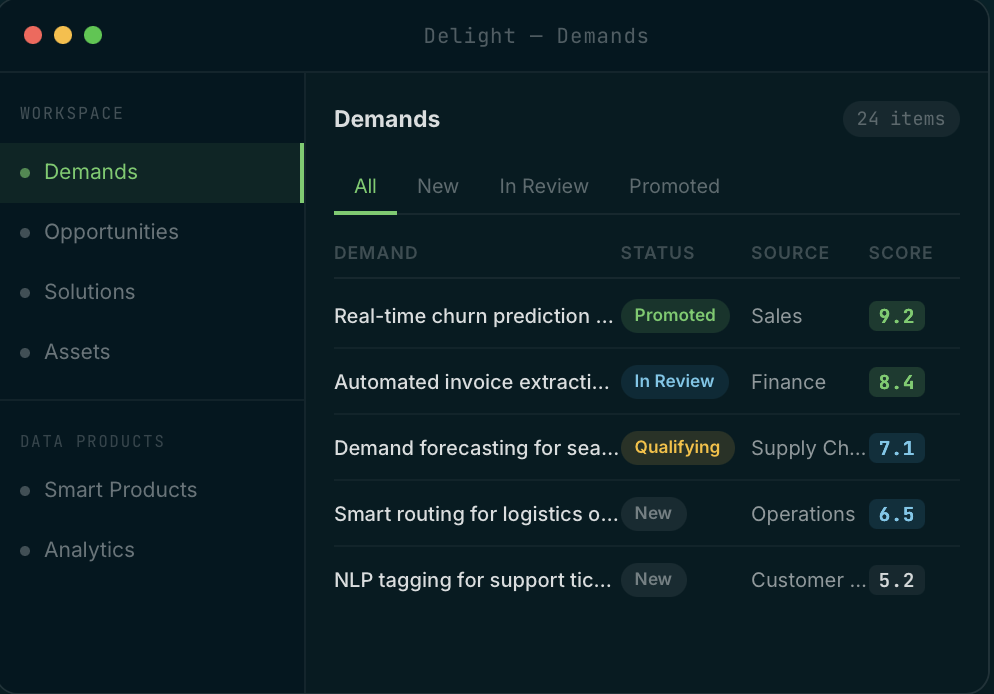
Structured Intake
When ideas arrive through emails, Slack threads, and hallway conversations, they arrive
inconsistently described and impossible to compare. Mindfuel's structured demand intake
gives every stakeholder — in every business unit — a standardized way to submit ideas, so
the information you need is captured from day one.
Automatic similarity detection across all incoming and existing demands
Side-by-side comparison of overlapping initiatives before they're promoted to discovery
Clear merge, link, or dismiss recommendations — no manual searching required
"In our first month with Mindfuel, the similarity detection surfaced
four pairs of near-duplicate demands from different teams. We
consolidated them into two initiatives and immediately reduced
scope by 40%."
Structured Intake
When ideas arrive through emails, Slack threads, and hallway conversations, they arrive
inconsistently described and impossible to compare. Mindfuel's structured demand intake
gives every stakeholder — in every business unit — a standardized way to submit ideas, so
the information you need is captured from day one.
Automatic similarity detection across all incoming and existing demands
Side-by-side comparison of overlapping initiatives before they're promoted to discovery
Clear merge, link, or dismiss recommendations — no manual searching required
"In our first month with Mindfuel, the similarity detection surfaced
four pairs of near-duplicate demands from different teams. We
consolidated them into two initiatives and immediately reduced
scope by 40%."
Structured Intake
When ideas arrive through emails, Slack threads, and hallway conversations, they arrive
inconsistently described and impossible to compare. Mindfuel's structured demand intake
gives every stakeholder — in every business unit — a standardized way to submit ideas, so
the information you need is captured from day one.
Automatic similarity detection across all incoming and existing demands
Side-by-side comparison of overlapping initiatives before they're promoted to discovery
Clear merge, link, or dismiss recommendations — no manual searching required
"In our first month with Mindfuel, the similarity detection surfaced
four pairs of near-duplicate demands from different teams. We
consolidated them into two initiatives and immediately reduced
scope by 40%."
FAQs